
September 2020
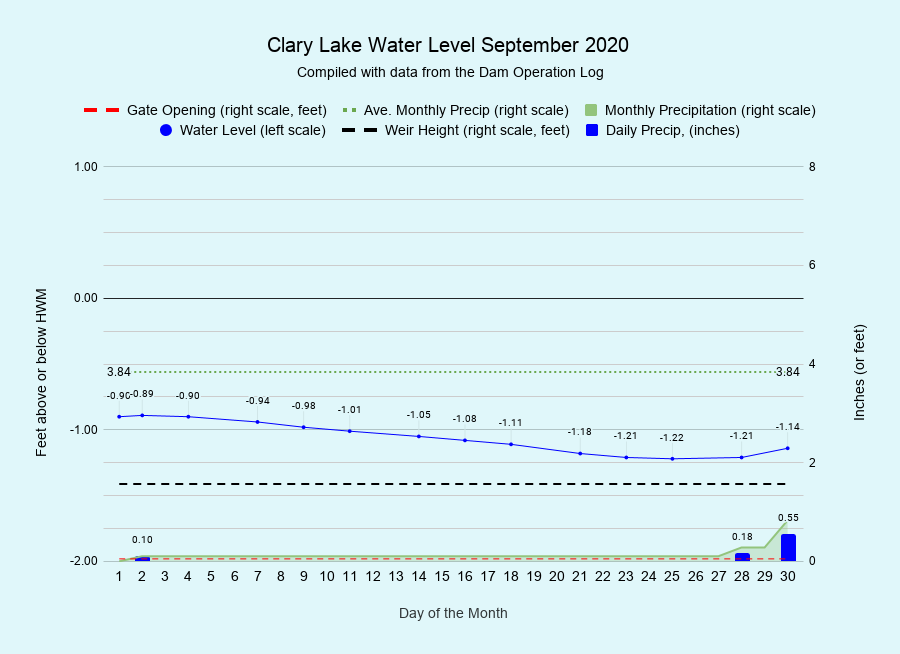
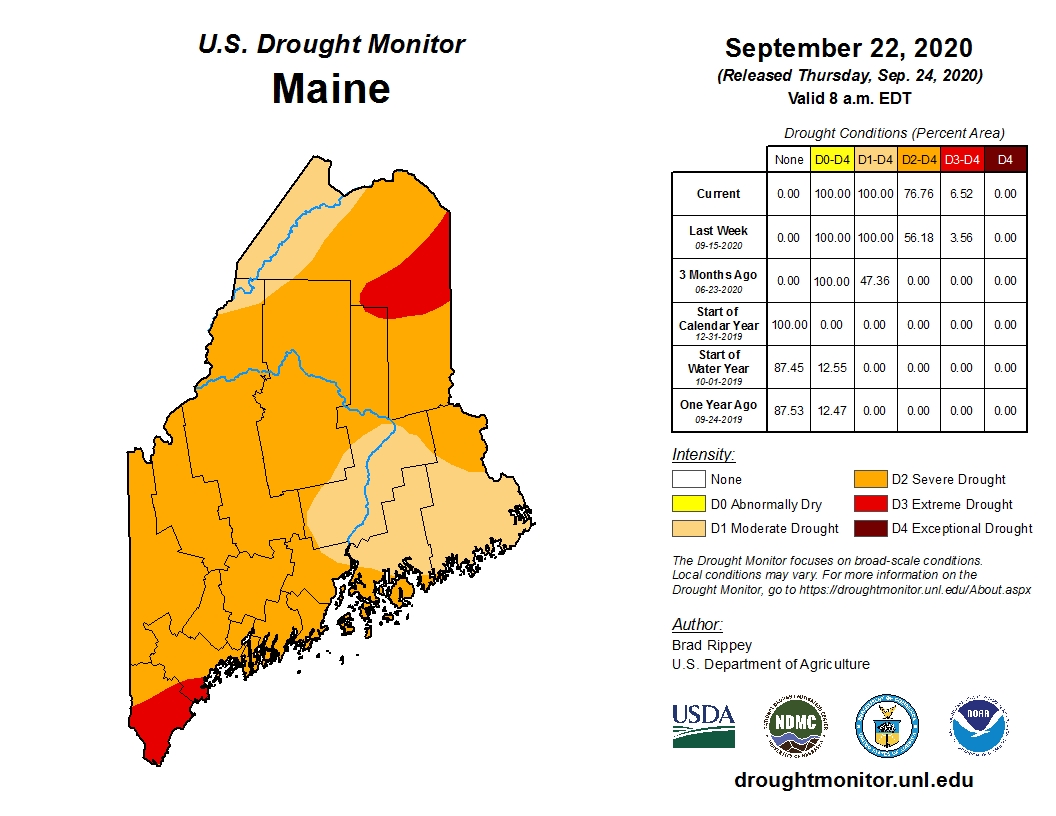
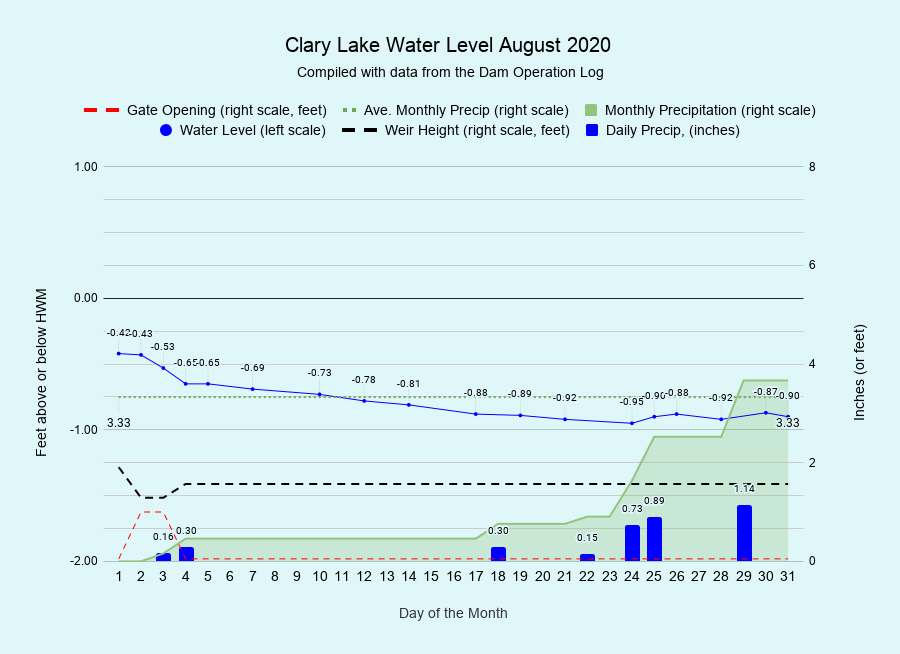
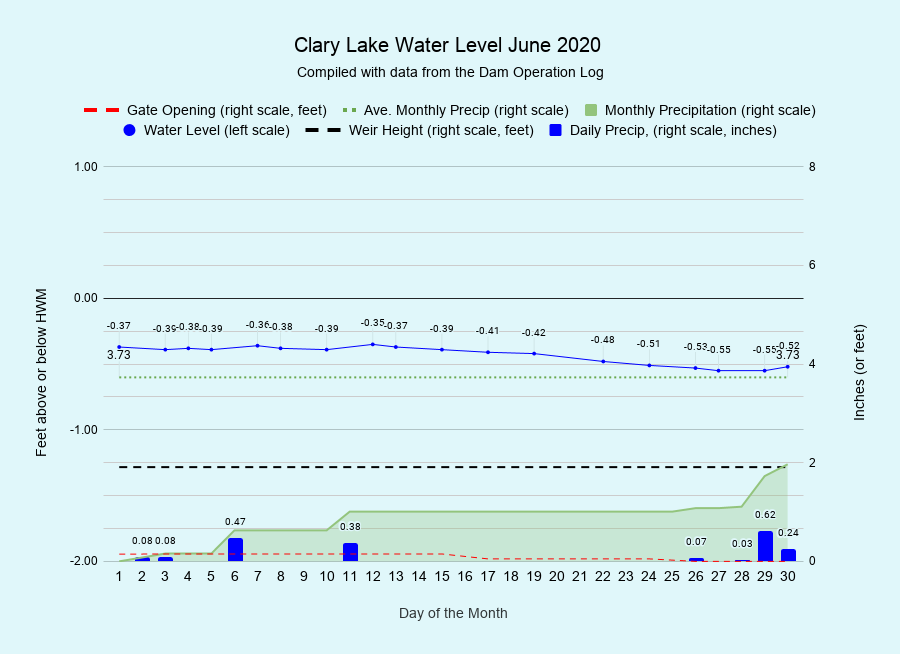
I have archived the September 2020 Water Level Chart (at left). September water levels were characterized by a leisurely drop over the course of the month from a high of -0.89 feet at the start of the month to a low of -1.14 feet at the end. On average the water level in August was 0.3 feet (3.6 inches) lower than it was last August. The real news in September were the severe drought conditions that have persisted (and worsened) for the entire month. We started the month slightly ahead of the yearly average and received only 0.10 inches of rain on September 1st and no more rain until storms on the 28th and 30th. That’s 25 days without a drop of rain. We ended the month with a total rainfall of only 0.74 inches, fully 3.10 inches shy of the monthly average of 3.84 inches. For the year we’re 3.04 inches below average for this date. We’re heading into October with a severe deficit of rain. Hopefully that will change soon.
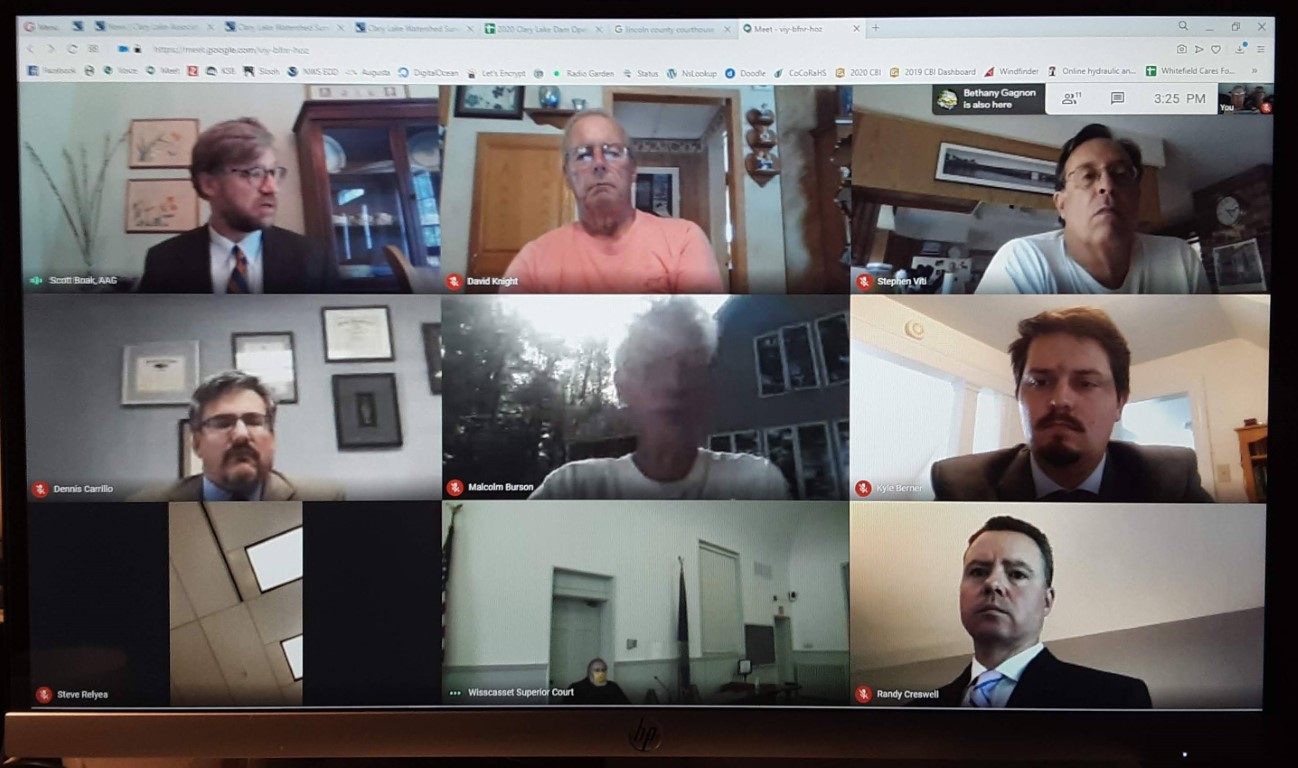
 It appears the Aquafortis Associates LLC [AQF] appeal of the Water Level Order Transfer (docket AP-20-4) is going to hearing after all! A one-hour hearing for oral arguments has been scheduled in Lincoln County Superior Court on September 8th at 2:30 PM. The hearing will be held in front of the Honorable Daniel Billings using
 On Thursday July 9, 2020 Aquafortis Associates, LLC [AQF] filed their reply brief in the matter of AQF v. Maine Board of Environmental Protection [BEP] Docket No. WISSC-AP-20-4, it being an appeal of a Department of Environmental Protection [DEP] Order issued in December 2018 transferring the Clary Lake Water Level Order to the Clary Lake Association. AQF filed their




 On Thursday June 25th the Clary Lake Association through their counsel Randy Creswell timely filed their brief in the matter of Aquafortis Associates, LLC [AQF] v. Maine Board of Environmental Protection [BEP] Docket No. WISSC-AP-20-04. The
 On Friday June 19th the State of Maine timely filed their brief in the matter of Aquafortis Associates, LLC v. Maine Board of Environmental Protection Docket No. WISSC-AP-20-04. The original appeal was filed by AQF in December 2018 in response to DEP’s issuance of an Order transferring the Clary Lake Water Level Order from Pleasant Pond Mill LLC to the Clary Lake Association, after we bought the dam in October, 2018 and it’s taken a convoluted and circuitous route to get where we are today. If you’re wondering WHY Aquafortis Associates LLC decided to spend the time and money appealing the WLO transfer, you’re not alone. You may want to also review
 The Maine Lakes Society has mailed their Spring 2020 Newsletter and it’s been made available as a PDF for online viewing. Enjoy. It’s a very nice newsletter with several very interesting articles including one on Snapping Turtles and another on Toxic Algal Blooms. Totally worth perusing this newsletter: