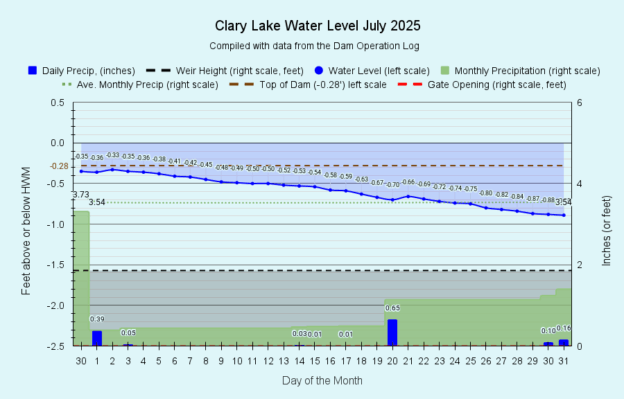
 I have archived the July 2025 water level chart (above, and at left). July was a dry month with only 1.40 inches of rainfall, only 39% of normal. The lack of rain resulted in a slow but steady drop in the lake level over the course of the month. Still, the lake fell only 0.54 feet during the month, again with roughly 2/3 of that drop attributable to evaporation.
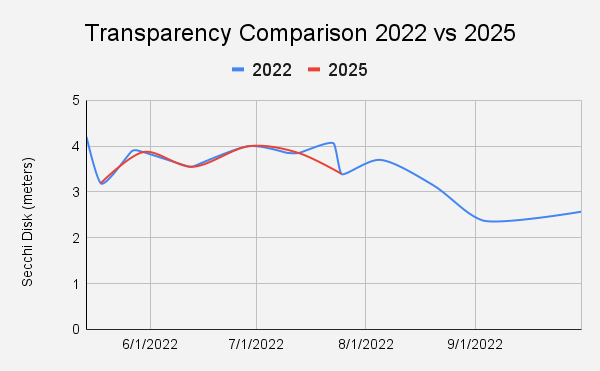
In many ways 2025 is looking like a repeat of 2022 both in terms of rainfall received and overall water quality data. By August 1st in 2022 we had received 24.72 inches of rain and this year we’ve received 24.55 inches. Outflows from Clary Lake are similarly very close, in 2022 only 1.03 lake volumes had passed downstream on this date and this year the figure is 1.04 lake volumes- incredibly close. In 2022 the lake level was -1.25 feet on August 1st; this year the lake is down 1 foot, only 3 inches higher than in 2022. Perhaps the most startling comparison is in lake transparency readings. In the following chart, the blue line are secchi disk readings from 2022 and the red line are secchi disk readings this year. The similarity really is pretty impressive:
We haven’t received the results from this year’s Total Phosphorus tests yet, but I’ll bet dollars to donut they will be very close as well.
Looking Ahead
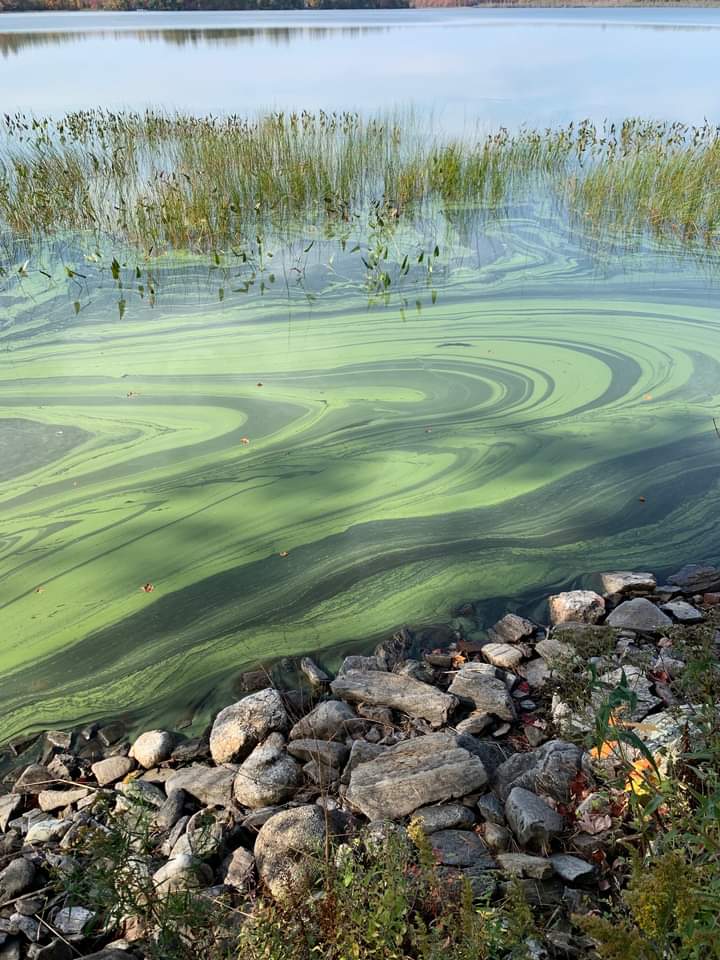 If 2025 continues to follow the trend established in 2022, what can we expect for the rest of the summer and fall? Well we experienced a rather intense algal bloom in the Fall of 2022, starting right about Labor Day and intensifying as fall progressed. By mid-October, it was in full swing (see picture at left taken October 12, 2022). While I won’t go so far as to say a similar bloom is a sure thing this year, it’s certainly possible and if the transparency trend continues, I won’t be at all surprised if we end up blooming this fall. You’ll find more pictures of the bloom in our Spring/Summer 2022 picture gallery.
Global warming / climate change is effecting this area more drastically than climate in southern states. I’m in SE PA and your weather is becoming more like ours; sometimes being warmer with an air quality less than ours (20 miles west of Philadelphia). Might I suggest the importance of educating and informing people about the many ways to lessen their carbon footprint. Such as shampoo/soap bars, recycled/bamboo toilet tissue, and planting native trees, heatpumps, solar panels, etc. Best Wishes, Susan M Rosso
Thank you for your comment Susan. We’re well aware of the issue of climate change.