Category Archives: Technical Lake Stuff

September 2019 Water Level Chart Archived

9 Clary-Lake-Water-Level-Precipitation-September-2019

September 2019

I have archived the September 2019 Water Level Chart (at left). The most notable thing the September chart shows is how dry it’s been! We received only 1.97 inches of rain, just a little over 1/2 the September normal rainfall of 3.84 inches. As of the end of August we were 1 inch above normal rainfall, but the lack of rainfall in September means we’re now 0.85 inches BELOW normal for this date. Hopefully precipitation will pick up later this fall.

Despite the lack of rainfall in September, the lake level remained well within our target range of -0.50 to -1.0 feet below the HWM (high water mark) while maintaining the required minimum flows. We attribute this relative lake level stability to our management practices (as described in our Water Level Management Plan) and the repairs we performed last Fall which have reduced leaks to a minimum. Per our plan, we will continue to gradually lower the lake level in October to between 1 and 1.5 feet below the high water mark, and we expect to reach the maximum draw down of approximately 2 feet below the HWM by the end of November where it will remain until early Spring.

18 September 2019: Maine Public Radio Program on Algal Blooms

Scott Williams of Lake Stewards of Maine

There is a new Maine Public program on algal blooms and climate change that is well worth watching (or listening to). Here on Clary we have avoided a severe algal bloom this season though we’ve seen them in the past; we did have a mild, short-lived bloom back in early July, no doubt brought on by a spike in phosphorus levels due to heavy rainfall and the resulting runoff in April, May, and June. While Phosphorus levels have remained high this summer, transparency has remained greater than 3 meters all season. We’ve been fortunate. We are most at risk however in September and October as the lake water “turns over” mixing phosphorus at the bottom of the lake into the upper layers of water where it can feed blue-green algae.

August 2019 Water Level Chart Archived

8 Clary-Lake-Water-Level-Precipitation-August-2019

August 2019

I have archived the August 2019 Water Level Chart (at left). The most notable thing about this chart is how much rain we received during what has traditionally been the driest month of the year. August started out dry, but it wasn’t long before we broke the Summer drought trend started in July. We received a total of 3.70 inches or 0.37 inches more than the average for August. This rainfall helped keep the lake level right about where we wanted it all month. For the year to date we’re 1 inch above average.

Minimum flows for the period from July 1st until September 15th are 1.9 cfs (cubic feet per second) which is about how much leaks through the dam. Minimum flows rise to 3.5 cfs on September 16th. The minimum flows vary throughout the year as follows:

  • 11.3 cfs between January 1 and March 15;
  • 35.9 between March 16 and May 15;
  • 8.3 cfs between May 16 and June 30;
  • 1.9 cfs between July 1 and September 15;
  • 3.5 cfs between September 16 and November 15; and
  • 15.5 cfs between November 16 and December 31.

I’m still tweaking the monthly water level chart from time to time, but don’t expect major changes. I like this one.

July 2019 Water Level Chart Archived

6 Clary-Lake-Water-Level-Precipitation-July-2019

July 2019

I have archived the July 2019 Water Level Chart (at left). The most notable thing about this chart is it shows rainfall fell off a cliff in July with only 2.39 inches being recorded for the month, over an inch less than the average of 3.54 inches for July. The latter part of the month has been driest: we’ve only received 0.16 inches of rain since July 13th. That said, due to the above-average rainfall received in April, May, and June, we’re still 0.65 inches above the yearly average for this date. While we’re not in official drought territory yet, we will be soon if this dearth of rainfall continues.

The lake level has fallen since the first of the month, starting out 0.13 feet above the HWM and ending the month 0.32 feet below the HWM, a total range of only 0.45 feet. Still, despite the lack of rain, the lake level is higher now than it historically would be on this date; water was still flowing over the top of the dam until just a few days ago. We’ve only been able to maintain this high water level because of the dam repairs we made late last fall which has reduced leaks to a just a few cubic feet per second, which conveniently supplies the minimum flows (1.9 cfs) for this time of year. We anticipate the lake level will continue to fall an additional 6-8 inches through the month of August, depending on rainfall. Continue reading

05 July 2019: Moderate Algae Bloom in Progress

20190703_122534

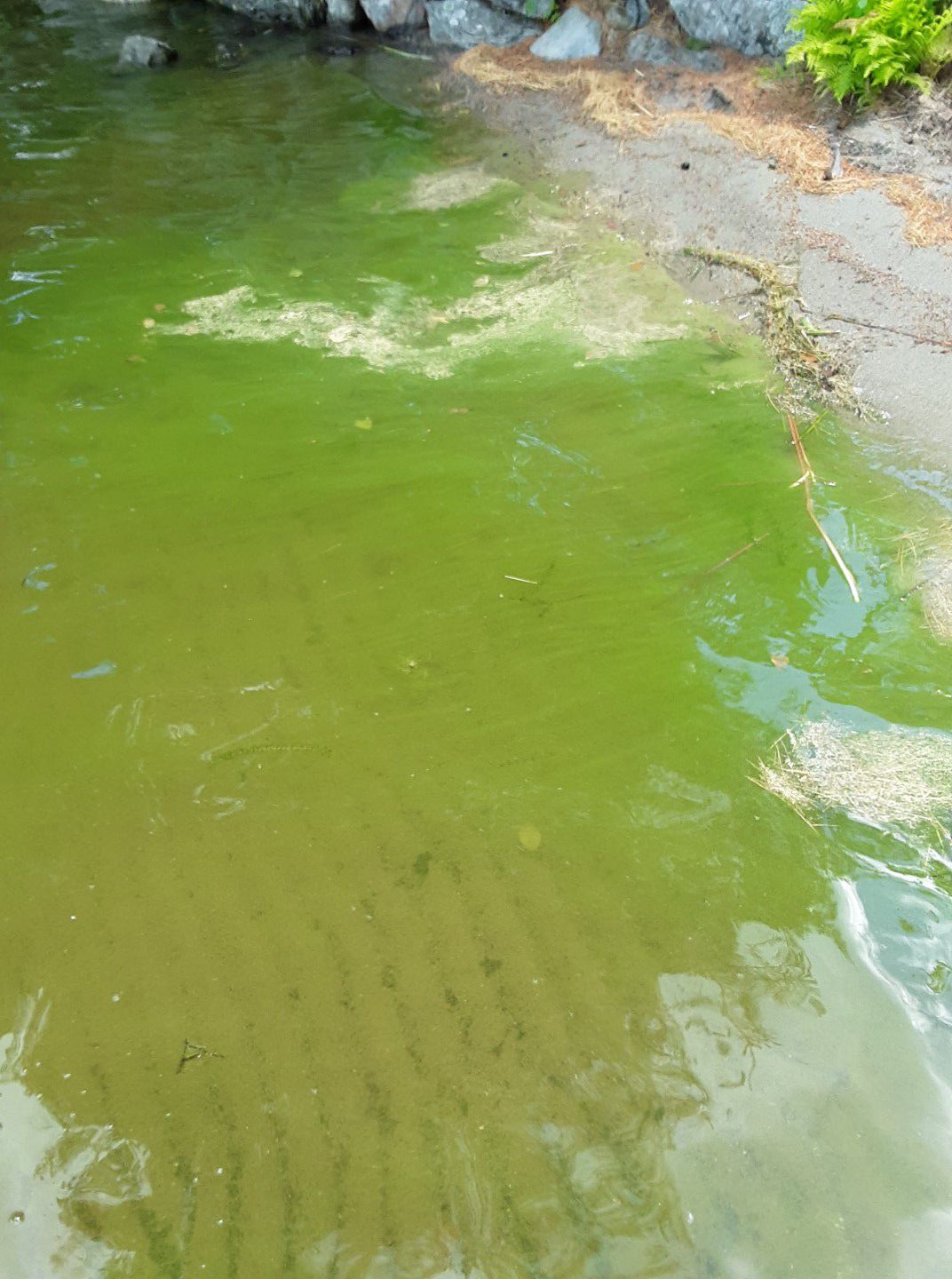
Cyanobacteria coloring the water.

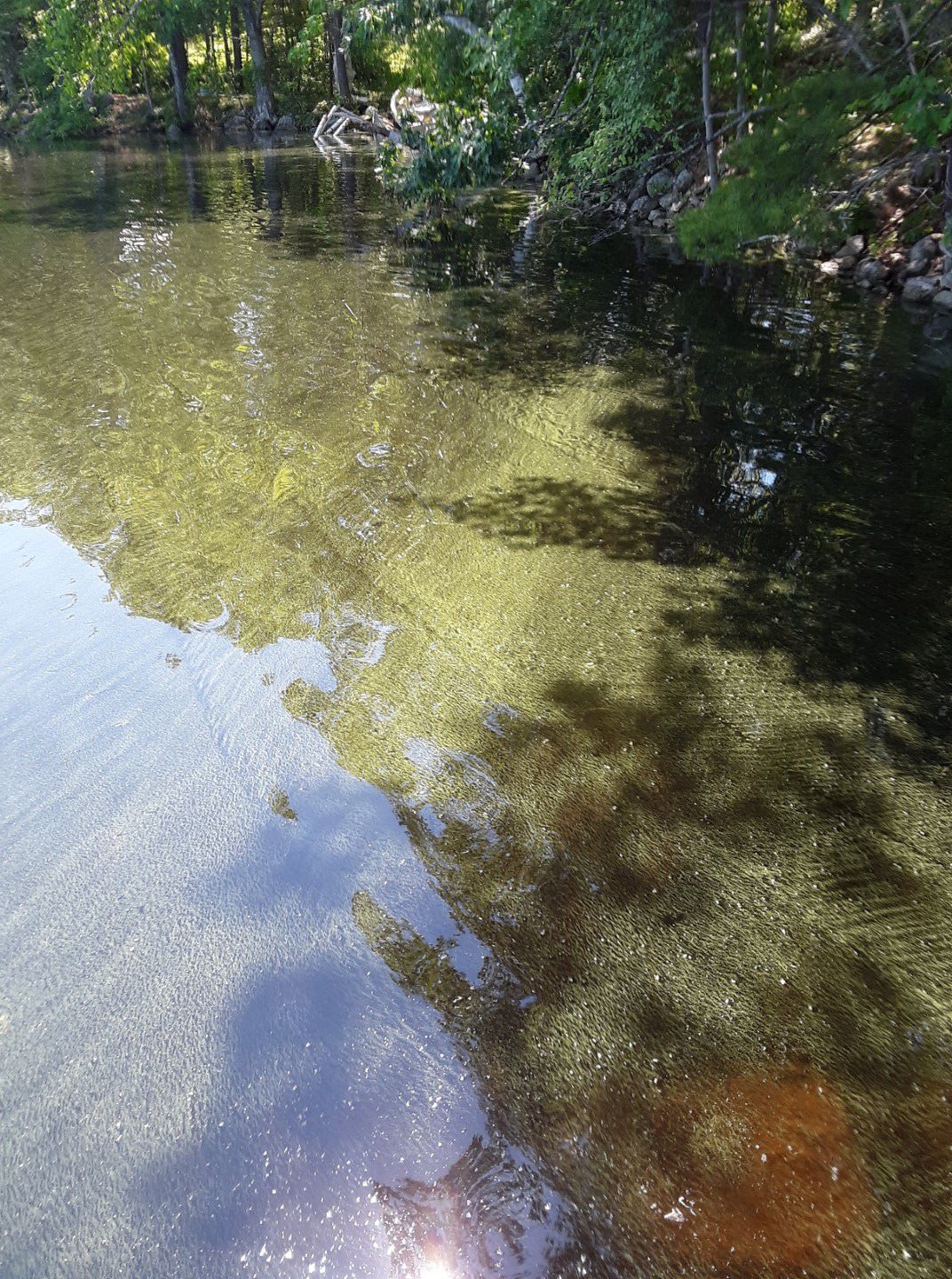
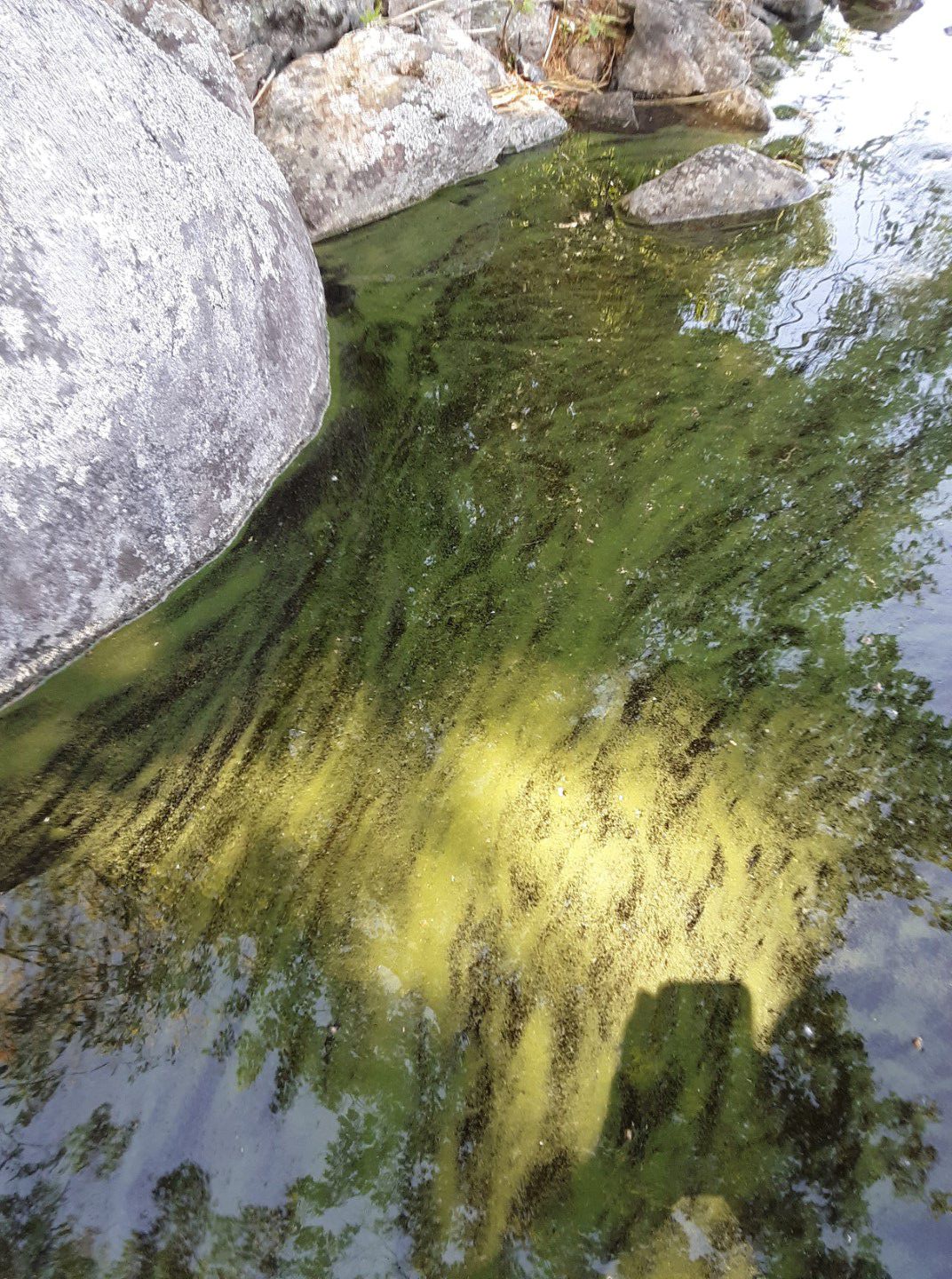
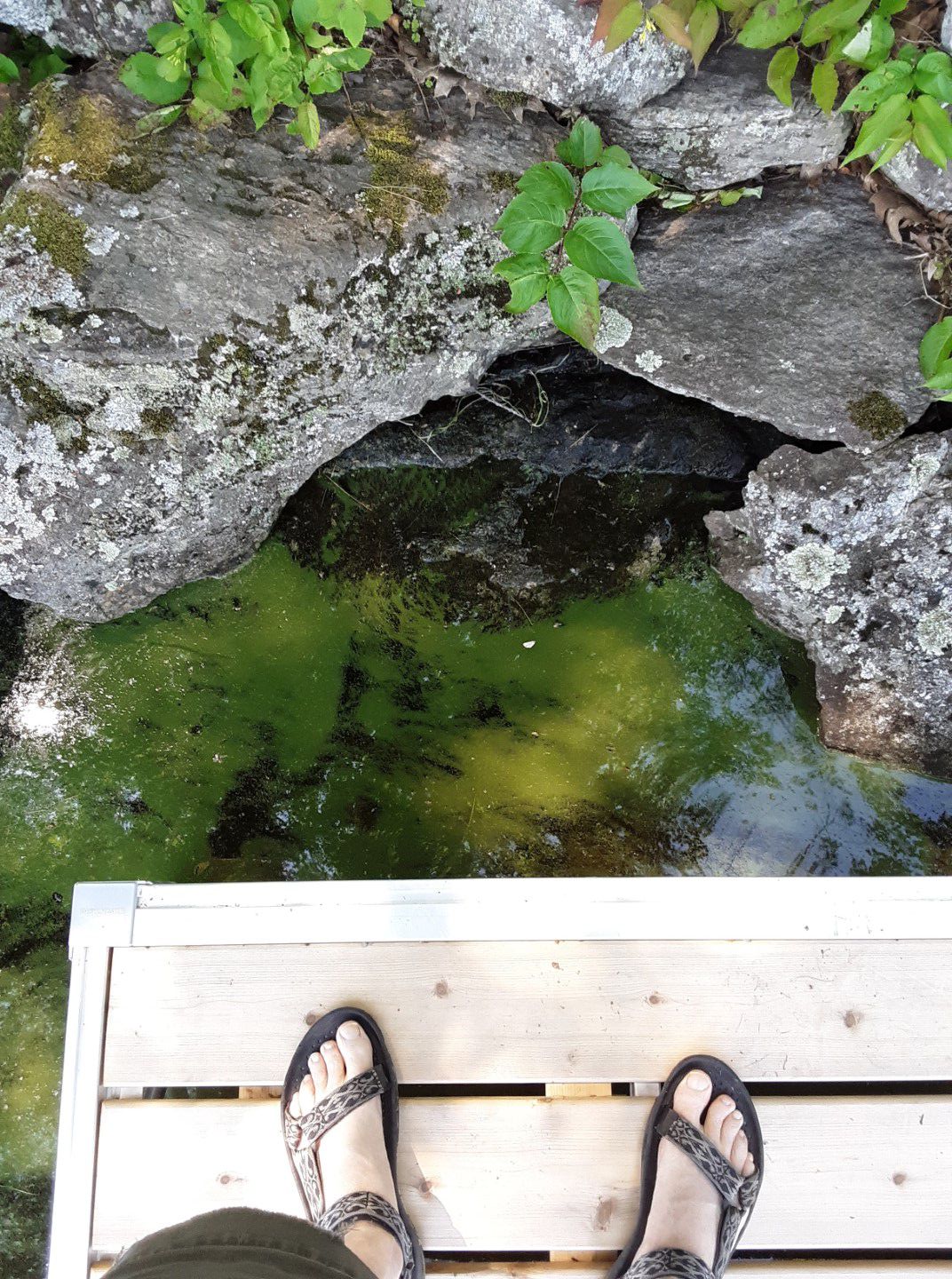
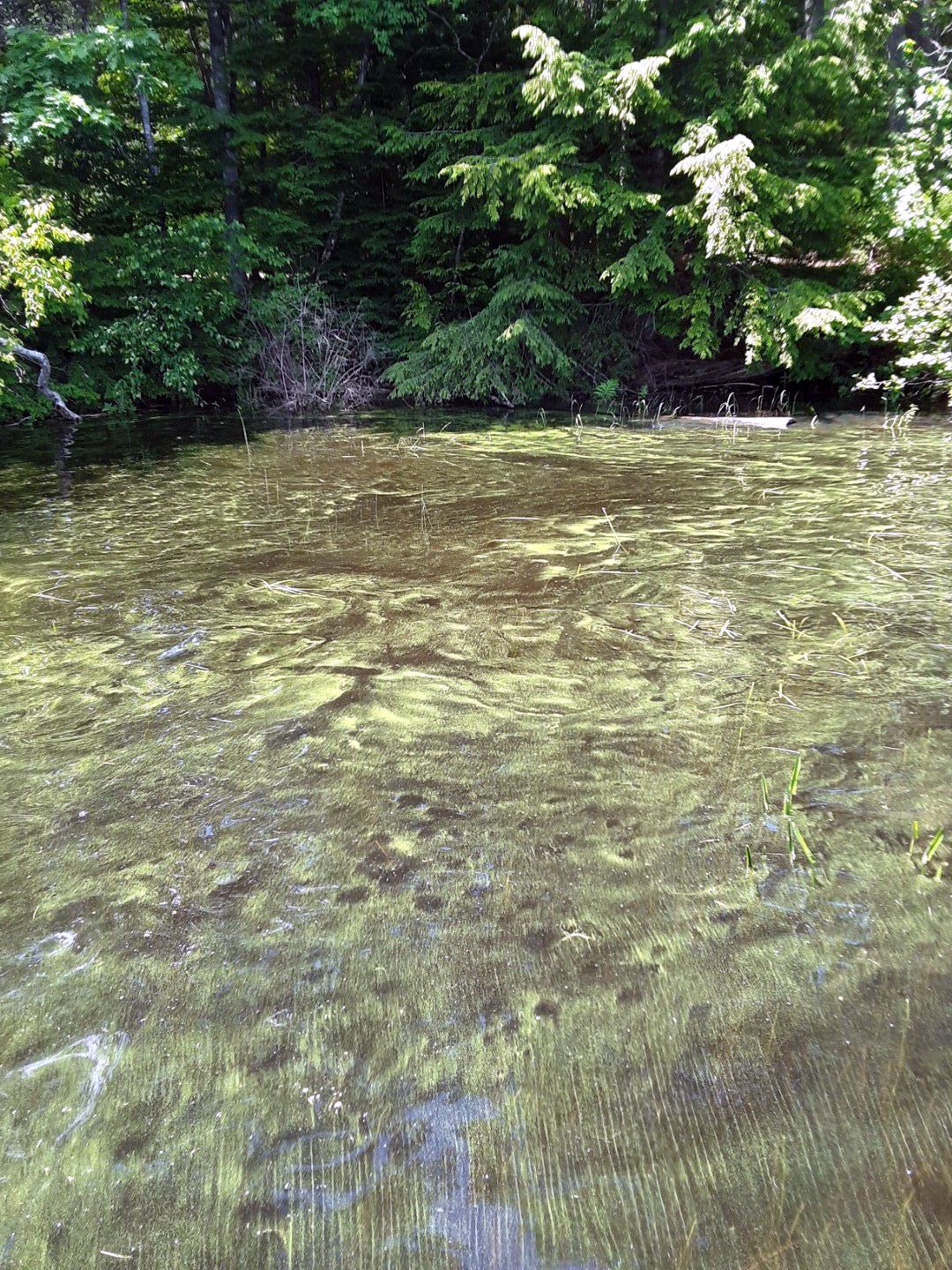
You may have noticed a green scum drifting on the lake surface recently or seen loads of green particles suspended in the water and thought it was pollen. Well, it does look a lot like the pine pollen that was blowing around last week, but that was yellow, and this stuff is green. Clary Lake is actually experiencing moderate blue-green algae growth resulting in an algal bloom. This early season algae bloom has no doubt been fueled by excessive runoff from all the rain this spring (15″ since the 1st of April!) which has introduced Phosphorus and other nutrients into the lake. Phosphorous is the primary food for plants and algae. Blue-green algae technically is a phylum of bacteria (cyanobacteria) that obtain their energy through photosynthesis. Another likely source of Phosphorus is rotting terrestrial vegetation. For years, better than 300 acres of drained wetlands have been growing grass, goldenrod, alders, and other terrestrial plants and that land is now under water, and the vegetation is rotting. This releases nutrients including Phosphorus in the water, helping to fuel aquatic plant and algae growth. Here are a few more photographs:

All this rainfall has also resulted in significant flushing of Clary Lake, well in excess of normal. Since January 1st, the lake’s entire volume of water (7,224 acre-feet) has been replaced almost twice. The inverse of the flushing rate is retention time (how long water stays in the lake) and that figure has decreased to about 92 days. The published “flushing rate” for Clary Lake is 1.81 times per year. We’re going to exceed that value by a significant amount. This will help “wash out” the nutrients currently in the lake, but will also result in more nutrients being brought into the lake. This is why controlling non-point sources of soil erosion and sedimentation is So Important: it doesn’t help replacing nutrient-laden water with more nutrient-laden water.

I expect this current algal bloom to dissipate soon, and it remains to be seen if we’ll have additional algae growth this year. Under the circumstances, I wouldn’t be surprised. It is important to remember that even though the dam has been repaired and the lake level restored, the ecology of Clary Lake has been severely damaged as a result of the 8 years of low water and it going to take some time to recover. Clary is still at-risk from both natural and man-caused issues and deserves our ongoing attention.

June 2019 Water Level Chart Archived

6 Clary-Lake-Water-Level-Precipitation-June-2019I have archived the June 2019 Water Level Chart (at left). The most notable thing about this chart is that it shows we received 6.72″ of rain in June which has got to a record of some sort. As a result, the lake level has remained very close to or slightly above the HWM elevation of 151.17 feet with water flowing over the top of the dam for the entire month. In fact, water has been flowing over the top of the dam since April 1st, which is quite unusual. Average rainfall for June is “only” 3.73 inches and we exceeded that amount by almost exactly 3 inches. This puts us going into summer 1.8 inches ahead of average precipitation for this date. We expect the lake level to gradually drop over the next 2 months, assuming precipitation returns to something more like normal.

Minimum Flows drop today to 1.9 cubic feet per second (cfs), the lowest outflow rate of the year. Outflows will remain at this level through September 15th when they go up to 3.5 cfs.

I’m liking the new water level chart pictured above. What I like most about it is I’ve spent exactly NO TIME uploading daily updates as the charts are generated dynamically by Google.  That said, I’m still tweaking the design.

May 2019 Water Level Chart Archived

5 waterlevelchart_May2019

May 2019

I have archived the May 2019 Water Level Chart (at left). The most notable thing about this chart is that it shows the lake level hovered around the Normal High Water Mark for the entire month, something that hasn’t happened since last month 🙂 More to the point, this is the last in this hand-made series of water level charts that I’ll be producing. I’ve been threatening to stop making these charts for a while, but old habits are hard to break. This time I’m really done. I started 8 years ago in January 2012 at the start of our long water level crisis. The introduction of the new Dam Operation Log however with its own automatically generated charts and graphs has made these traditional charts a duplicated (and wasted) effort. I have better things to do now and I just can’t justify the time and effort to continue making them. Since starting recording water level measurements in December 2011, I’ve made 2700 individual water level measurements and posted 101 Monthly water level charts. It’s the end of an era, and about time!

The Current Water Level Charts page will remain but with a new look and sporting new automatically-generated charts and graphs from the Dam Operations Log.

Finally, it was a wet month. We received 3.88 inches of rain for the month, slightly more than the average for May. For the year at 15.96″ which is right about where we’re supposed to be.

24 May 2019: CLA To Conduct Courtesy Boat Inspections

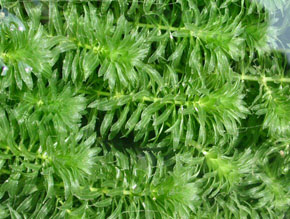
HYDRILLA (Hydrilla verticillata)

With the State boat launch back in service, our concerns rightly turn to protecting Clary Lake from the chance introduction of invasive aquatic plant species. To that end, the Clary Lake Association is gearing up to start participating in Maine’s Courtesy Boat Inspection (CBI) program starting this summer, and we’re going to need volunteers! While there are various ways invasive plants can make it into lakes, by far the most common transport mechanism is on boats and trailers. Sadly, there are a number of lakes in the State with an invasive aquatic plant problem including several nearby lakes. The goal will be to have enough people lined up and trained so that the boat launch can be covered during the weekends to inspect boats and trailers before they they put in the lake, to make sure there are no invasive plants hitching a ride. Continue reading

01 May 2019: DEP Approves Water Level Management Plan

We have received provisional approval of our Water Level Management Plan [WLMP] from the Maine Department of Environmental Protection. The WLMP details the procedures we’ll be following to operate the Clary Lake dam and manage the water level so as to remain in compliance with the Clary Lake Water Level Order [WLO]. The completion of a management plan was the final requirement of the WLO and it’s good to have this task behind us. This first season is like a shakedown cruise: we’ll be sitting down with DEP staff next winter to review the plan to see how well it’s met everyone’s needs. Continue reading

April 2019 Water Level Chart Archived

4 waterlevelchart_April2019

April 2019

I have archived the April 2019 Water Level Chart (at left). The most notable thing about this chart is that it shows the lake level rose up to the High Water Mark (HWM) on the first day of the month, for the first time since before our water level crisis started back in 2011! The lake level has been hovering right around the HWM for the entire month, spending some time above and some time below it, rising as high as 3 inches above the HWM on April 27th before dropping to end the month 1.80 inches above the HWM. A lake level slightly above the HWM is a more or less normal condition this time of year, and there has been water flowing over the top of the Clary Lake dam for the entire month. When the spring runoff ends (it’s already peaked), the lake level will drop back to a more reasonable level 4 to 6 inches below the HWM. The plan is try and keep it around that level through July and into August. Welcome to the New Normal. Continue reading

26 April 2019: Water Monitoring Resumes for 2019

David measures the wind speed, direction, and temperature.

Kelsie French, David Hodsdon, and I headed out today to kick off the 2019 Clary Lake water quality monitoring season. David started monitoring on Clary Lake in 1975, making this his 44th year on the job! The average secchi disk reading was 3.75 meters (12.3 feet) which is about average for this time of year- spring rains and runoff carries silt into the lake which reduces transparency. It’ll clear up some as summer approaches. Dissolved Oxygen pretty uniform throughout the water column, also a normal condition for this time of year. We had planned on obtaining a water sample for Phosphorus testing but the weather today just wasn’t conducive to spending any more time on the water than we had to. After all, it’s not like we were fishing. At 9.8° C the water temperature was actually warmer than the air! All I can say is I look forward to more pleasant weather this year than what we had to put up with today!

You’ll find water quality data back to 2012 on our Clary Lake Water Monitoring Data page.

14 April 2019: Ice Out!

Finally, Clary Lake is ice free! I know most of you on the north and northwest shores have had open water for the better part of a week, but ice persisted on the south and east sides until yesterday. Even this morning (picture at left) there was still a large raft of ice down by the State boat launch, which largely disappeared by noon. While ice out seemed to take forever this year, the median date for ice out is April 13th (half occur before and half occur after that date) so we’re really right about on schedule. Ice out means ALL the ice is melted. Check out our Ice-In and Ice-Out page which has records going back to 2001.

Let the boating begin!

March 2019 Water Level Chart Archived

3 waterlevelchart_March2019

March 2019

I have archived the March 2019 Water Level Chart (at left). The most notable thing about this chart is it shows that while we’re still a couple of inches short of the elevation of the high water mark as determined by DEP, the lake has nonetheless reached the highest level we can realistically expect to maintain for any length of time: as of this morning, the water level has begun trickling over the top in two low spots, one on the left side of the dam and the other on the right. By my reckoning Clary Lake hasn’t had this much water in it since 2010. I’ve been waiting for this moment for 8 years: as the lake has filled with water, my heart and soul have filled with gratitude. Over the past few weeks as the lake level has DSC_6276gradually risen, I’ve been seeing water in places where I remember it when I was a kid, and Clary Lake was my playground: the marsh by the Whitefield and Jefferson Town Line, one of my favorite haunts and fishing spots as a kid, is full once again with high water extending all the way to the culvert under the road. Also the marsh at the inlet from Three Corner Pond on Route 126 where we used to launch our boats before the State boat launch was built is once again full water. Continue reading

21 March 2019: Lake Level Staff Gauge Installed

Elevation-CheckWork to come into compliance with the Clary Lake Water Level Order (WLO) continues. Special Condition #6 of the WLO requires that the dam owner install a lake level staff gauge graduated in feet and tenths of a foot located in a “publicly visible location” behind the dam. The zero foot mark on the gauge must mark the elevation of the Normal High Water Mark (HWM) which has been previously determined to be at an elevation of 151.17 feet. I had already purchased the staff gauge from Forestry Suppliers earlier this winter. It’s nicely constructed of steel with a baked-on enamel coating, easy to read graduations, and brass grommets in the screw holes. It’s attached to a piece of pressure treated 5/4 board with stainless steel screws which in turn is attached to two steel brackets bolted to the gate structure with stainless bolts. It should prove serviceable for many years. Many thanks to Colin Caissie (pictured below left) for designing and fabricating the brackets to attach the staff gauge to the gate structure, and for helping with the installation. Continue reading

February 2019 Water Level Chart Archived

2 waterlevelchart_February2019

February 2019

I have archived the February 2019 Water Level Chart (at left). The most noticeable thing about this chart is it’s BORING, and how pleasant for a change not seeing rapidly fluctuating water levels! The lake level gradually dropped only 3.72″ over the course of the month from a high of -10.68″ below HWM at the start of the month to -14.40″ below the HWM at the end of it, staying pretty much right within the range we were looking for. Our goal was to keep the lake level right about 12″ to 18″ below the HWM. We didn’t have any major precipitation events: rainfall for the month of February was slightly below average with precipitation of only 2.16″ bringing us to 5.36″ for the year, slightly above the average of 5.04″ thanks to a extra wet January. We do have a reasonable snow pack developing so runoff this spring should be more than sufficient to raise the lake level up to the HWM, for the first time in over 10 years. Continue reading

Lake Stewards of Maine’s Winter 2018-19 Water Column Newsletter Is Out

I just received my copy of the 2018-2019 issue of the Water Column, the newsletter of Lake Stewards of Maine (formerly the Maine Volunteer Lake Monitor Program). This issue has a great article by Roberta Hill which discusses the impact climate change is having on lakes in Maine, and everyone who cares about Clary Lake should read it. While there is debate in some quarters about the causes of climate change, there is little question that our climate is in fact changing and the effect it is having on Maine lakes are very real. If there’s one thing the last 8 years of our lake level crisis has shown us it is that lakes are fragile and tenuously balanced ecosystems and that seemingly small changes in water levels, water temperature, and nutrient load can have profound impact on lake ecology. Now that we’ve succeeded in restoring the historical water level regime of Clary Lake, I think our primary challenge going forward will be to preserve Clary’s water quality, and keep it free of invasive plant and animal species. To quote the article:

“We now have sufficient data to know with a high degree of certainty that, like much of the northeast, Maine is getting warmer, experiencing wetter winters and springs, drier summers, and more frequent extreme weather events (including floods and droughts). The shifting climate is causing our growing seasons in Maine to become longer, and the periods of ice cover on our lakes to become shorter. All of the changes described above pose serious challenges for lakes.” 

The Clary Lake Association has been a long time supporting member of the Lake Stewards of Maine and has been monitoring water quality on Clary Lake since 1975 making Clary the 3rd longest monitored lake in the state. We’ll be starting up the 2019 water monitoring season again in late April or early May.

January 2019 Water Level Chart Archived

1 waterlevelchart_January2019

January 2019

I have archived the January 2019 Water Level Chart (at left). The best thing about this chart is that it shows that for the first time in over 8 years, the lake level was right where was supposed to be, when it was supposed to be there. The lake level remained above -24″ below the HWM for the entire month. How sweet is that! For the first 3/4 of the month, the lake level hovered right around 18″ below the HWM, give or take a few inches. Then we received 1.66″ of rain on the 24th which caused the lake to rise almost 1 foot, topping out at about 5″ below the HWM. That was higher higher than we’ve seen the lake in over 8 years, and actually than we wanted to see it so we opened the gate a foot to release more water in addition to what was already going over the weir. That halted the lake level rise. Since then it’s been falling gradually, ending the month not quite 10″ below the HWM. Welcome to the new normal! Continue reading

25 January 2019: Lake at a Level Not Seen in Years

The lake has so far risen over 8″ as a result of yesterday’s heavy rain and is now 7 inches below the normal high water mark. The last time it was this high was 9 years ago, in 2010. It will continue to rise a little more over the next couple of days before it starts falling again. Ideally this time of year we’d like it between 12 and 24 inches below the HWM.
IMG_20190125_084053 (Medium)


December 2018 Water Level Chart Archived

12 waterlevelchart_December2018

December 2018

I have archived the December 2018 Water Level Chart (at left) bringing us to the end of what has turned out to be the LAST YEAR of sub-par water levels for the foreseeable future. At this time last year the lake level was 42″ below the HWM and we were waiting for Justice Billings to rule on the appeal of the Clary Lake Water Level Order while at the same time beginning to entertain the possibility of actually buying the Clary Lake dam from Paul Kelley’s bankruptcy estate. The ruling on the appeal came a few months later in February; the purchase of the dam, well that took a little longer. Looking back, what a landmark year it has been. Continue reading

November 2018 Water Level Chart Archived

11 waterlevelchart_November2018

November 2018

I have archived the November 2018 Water Level Chart (at left). I’m not sure what to say about it except that the lake level is too dam high! It is ironic that for the last seven years I’ve been wishing for HIGHER water, only to now find myself hoping for a LOWER water level so we can complete repairs to the Clary Lake dam. The lake rose only 6″ in October, and I had hoped that gradual rate of increase of the water level would continue into November, but it was not to be. We started the month at -48.84″ below the high water mark, peaked at -29.88″ on the 15th,  and ended the month at -32.64″ below the high water mark. There is currently about 8″ of water flowing over the original log flume, enough to prevent finishing the repairs at this time.

We received 7.10″ of rain in November or a whopping 2.73″ more than the average for the month. This brings us to 39.06″ for the year to date, 0.39″ more than average. I suppose, considering how much rain we received in November, we’re lucky the lake didn’t rise even more. I attribute this to the vastly increased outflows resulting from opening up the original 7′ wide log flume in the middle of the dam on November 9th. Continue reading