Category Archives: Association News
13 October 2016: Looking For Volunteers
 I’m looking for volunteers to help with testing our email and digital newsletter distribution system. Recent events have made it painfully clear that we need to make some improvements if we’re going to be able to reliably email our Membership.
Sending emails is pretty much routine these days and generally a reliable means of communicating as long as humans are doing it, but as soon as you put a program in control of the process and try sending an email, announcement, or newsletter to even as few as 80 or 100 addresses, remote mail hosts get twitchy, some more twitchy than others. If they sense spam, they’re either going mark it as spam so it ends up in the recipient’s spam folder, or they are just as likely to reject the message outright. Spammers are getting more sophisticated and spam has become a serious problem. Mail hosts are increasingly taking a “shoot first, ask questions later” approach in dealing with it. This may minimize the spam that ends up in your mailbox, but it also can prevent legitimate non-spam emails from being delivered. There are ways to minimize the chances that a bulk email will be marked as spam, but there are no guarantees.
The Clary Lake Association has sent several emails to its membership in the past few months. The first one was about the Boat Launch Cleanup Initiative back in August, and more recently, an email about the upcoming Harvest Potluck Supper was sent to our Membership just a few days ago. Both emails failed to successfully get sent to all addresses on the first try, with each requiring additional shenanigans on my part to finally get the emails sent. It was a tedious process and not wholly satisfying, to say the least. And for all that, I still have no idea how many of those emails ended up in spam folders or weren’t delivered at all. I do know that for the most recent email, for whatever reason, only about 1/3 of the emails that I know were actually sent have been opened. We can do better than that. Continue reading
06 October 2016: Clary Lake Parcel Map Now Online

If you haven’t figured it out by now, I love maps. I love looking at maps and during my nearly 4 decades in the Surveying profession I made a lot of maps, as part of my job. Now I make maps for fun and making cool and useful maps has gotten faster & easier with freely available Geographic Information System and CAD software integrated with database systems and online mapping services like Google Earth, Google Maps, and Google Fusion Tables. Enhancing traditional data with Geocodes (latitude and longitude) like a mailing list allows you to look at information in ways that hasn’t been all that easy to do in the past. This latest map is a Parcel Map (image above) that I’ve just completed using Google Maps and Google Fusion tables which shows property parcels in and around the Clary Lake Watershed with blue dots representing the locations of everyone in our Clary Lake mailing list database. It wasn’t particularly hard to do, the tedious part was scaling a latitude and longitude off a map and assigning it to a name in a spreadsheet. The rest was just data manipulation. The tax parcel information comes from the Maine Office of GIS, a great site which offers loads of free geocoded data, digital terrain data, and photography.
Some of you will recognize this map as similar to the Clary Lake Watershed Survey from a couple of years ago which uses the same parcel information, and the Clary Lake depth map which uses the same base map of the area. Continue reading
02 October 2016: Where Are Our Members Located?

Clary Lake Association Members. Google Earth photograph with Jefferson and Whitefield Parcels highlighted in red to show where the Current Year CLA Members are located. As you can see, we’re well represented by Jefferson property owners, somewhat less so by Whitefield property owners. Prepared by George Fergusson 02 October 2016
Well, as it turns out, mostly in Jefferson! Or at least that’s how it looks on the Google Earth photograph at left which shows parcels owned by CLA members colored RED. In actual fact, owners of approximately 55% of the lake shore properties in Whitefield are members of the CLA while in Jefferson the figure it more like 65% which is not a really significant difference. It just looks significant because the majority of shore front property in Jefferson belongs to CLA members whereas there are a lot of large acreage properties with large amounts of shore front located in Whitefield whose owners are not members of the Association. Just a few of those Whitefield residents joining the Association would change the look of the map considerably. There are also a few members who live outside of the Clary Lake watershed who aren’t represented on this map. Continue reading
CLA Harvest Pot Luck Supper This November 12th
 Mark your calendars! The Clary Lake Association Momentum Committee invites you to join us- the community coming together, lakeshore owners, neighbors, friends, and family alike, for a Harvest Potluck Supper to enjoy each other’s company, good home cookin’ and to celebrate our Lake.
Our Potluck supper will take place on Saturday, November 12, 2016 at The Sheepscot General on Townhouse Road in Whitefield from 4-7pm. The full scope of the event is still being developed, but we are now actively soliciting volunteers willing to contribute food— crock pot items, casseroles, salads, desserts, beverages. The cost is $7.00 for adults and $3.00 for children under 12. There will also be a raffle with details to be announced. Also look for ongoing updates here about the event as the date draws closer. You’ll find this event marked on the CLA Events Calendar. The Harvest Supper is coming up [fergcorp_cdt_single date=”November 12, 2016 3:00 PM EST”].
Add this event to your Google Calendar: 
The Momentum Committee was formed to foster a positive outlook as we move forward, appreciating what we have been given even in the face of the challenges presented by our lake’s current condition, acknowledging the challenges ahead, remembering all the hard work that has been done and will need to continue to be done in order to bring our lake back to its full health. It’s a call to thankfulness, generosity and goodwill and to focus on the simple yet powerful potential in people coming together. This event will be one of many in our continued commitment to celebrate the bounty of community and the importance of reverent stewardship of our nature resources.
The money raised will be used in part to fund future Momentum Committee events and activities. For more information or to contribute to this event, please contact Margaret Fergusson @ 207-458-3143; Mary Gingrow-Shaw @ 207-622-3308, or Erin Grimshaw @  207-346-4640. You can also email the Momentum Committee with questions or suggestions.
12 September 2016: Price Reduced!
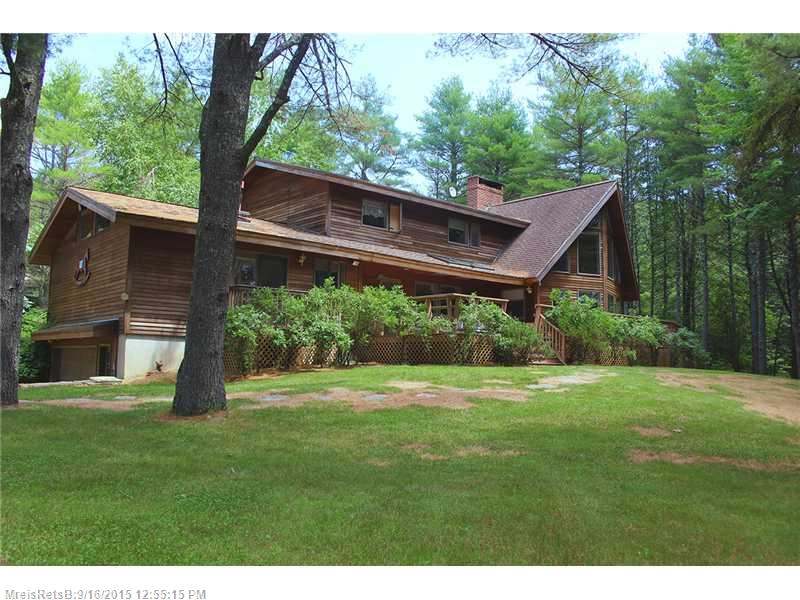
40 Enos Lane, Jefferson Maine
According to recently posted real estate listings on the Zillow Real Estate site and at the Trulia Real Estate site, the price on the Arthur Enos home and property on Clary Lake has been reduced from the original summer 2014 asking price of $875,000 to a more reasonable but still breathtaking $765,000. The real estate listings include a bunch of recently taken pictures. So much for Art’s “I don’t really care if I sell it or not” remark. I assume now he still doesn’t care if he sells it, but at a lower price. According to Zillow, the property was originally listed in July 2014 (see “22 July 2014: Enos Property on Clary Lake for sale“) and was just taken off the market a few months ago. It was relisted at the lower price just a few days ago. I wish Mr. Enos all the luck selling his property.
09 September 2016: CLA Membership Goal Reached!
 [dropcap]Within[/dropcap] just 2 days of posting about our membership goal, we’ve added the additional 11 members needed to bring our total to 100, our membership goal for this year! It’s not just a goal, it’s an all-time record. The memberships consisted of 3 renewals and 8 NEW MEMBERS, people who have either never been Association members, or haven’t been for a long time. I wish to thank those people who stepped up, and apologize to those whose arms I twisted… a little bit. I never doubted that we’d reach our goal, I just didn’t anticipate the enthusiastic and supportive response to that post.
Just because we’ve reached our goal is no reason to get complacent. There are still a dozen or more people who were members last year who have not renewed their memberships this year, and I sincerely hope they will all renew soon. Just because we’ve reached OUR goal shouldn’t stop them or anyone else from joining the Association. There is strength in numbers. We’re on a roll folks, let’s keep it going.
In Memory of Christopher Gillette

Christopher Gillette
1955 – 2016
It is with sadness that I inform you of the passing of Christopher Gillette this past August 12th. Chris was a long-time and loyal Clary Lake Association Member and a personal friend of mine with whom I have corresponded at length in recent years about Clary Lake. He will be missed by many. The Board, and on behalf of the Clary Lake Association, wishes to offer our condolences to his wife Leslie Gillette, his 2 daughters Fallon and Alexandra, his father Thomas Gillette, his brother Baxter Gillette, and his cousin, Kate Seba, all of whom are Clary Lake Association members. Chris had just completed the construction of a new home on Clary Lake. Chris was 61.
07 September 2016: Making Progress Toward Our Membership Goal
 We are very close to reaching this year’s Membership goal of 100 members. Currently at 89, many of this year’s members are new members to the Association: they have either never been members before, or they have not been members for a long time. In either case, this is a great trend that I hope to see continue! However, there are a number of people who were members last year or the year before who have NOT renewed their membership yet. We need all the support we can get, now more than ever, so if you are one of those people who has intended to renew your membership but just hasn’t found the time yet, please do so soon! It is important! If everyone who was a member last year would renew again, we would not only meet our membership goal, but exceed it.
I’d also like to bring your attention to our new online Current Membership List. For years, the Clary Lake Association did not disclose their membership list for no particular reason other than the organization was relatively small, the group fairly close knit, and everyone knew everyone else anyways. When I first became President of the Association back in 2o07, we were averaging 35 to 40 members a year. Since then, interest in and support of the Clary Lake Association has grown considerably and our membership numbers have reflected that increased interest. Last year we had 81 members and as I mentioned at the start of this posting, this year’s goal is 100 members.
Two years ago we started to publish a Membership List in the Summer Newsletter, and it was well received. People commented favorably about it and they universally appreciated being publicly recognized for being a member. In fact, I believe making our list public has actually helped increase our membership- it certainly hasn’t hurt it! So after discussing it with the Board, we decided publishing our Current Membership List on the website was a good idea. You’ll find it at the top of the list under the Membership Main menu heading.
28 August 2016: State Boat Launch Rock Cleanup Initiative Finished
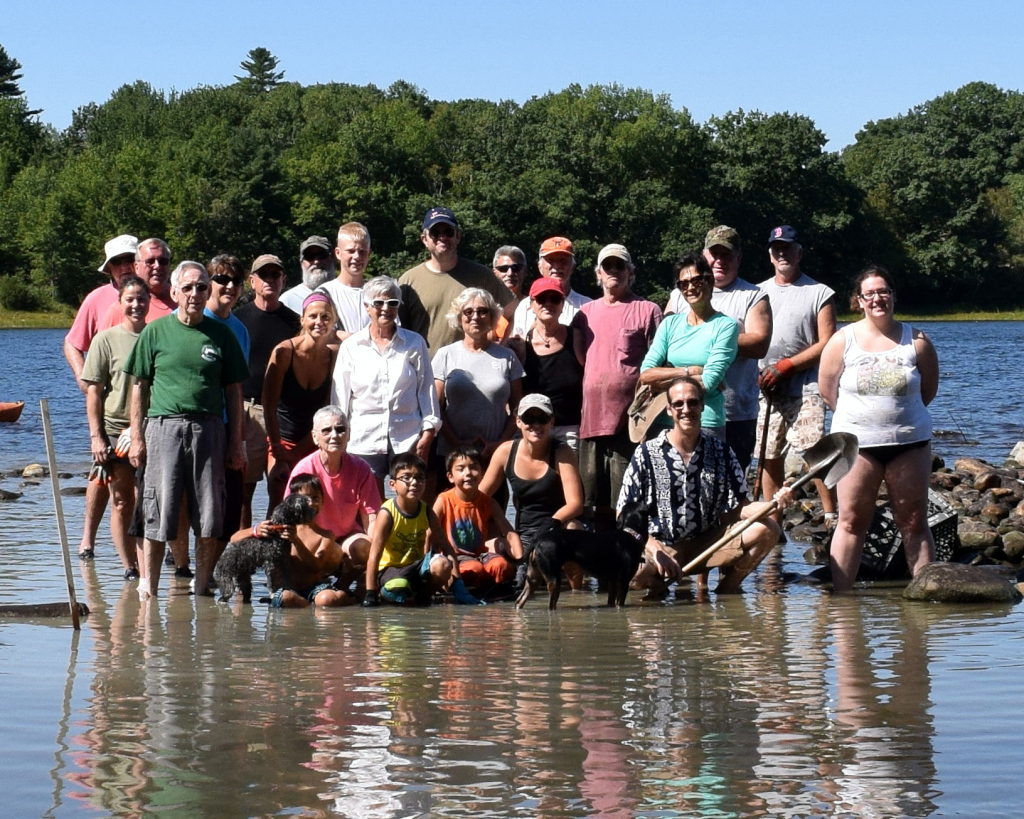
The Boat Launch Rock Cleanup Crew
We had a great turn out for the Boat Launch Rock Cleanup event yesterday with 30 people showing up to move rocks or assist in other ways. A few people unable to move rocks fulfilled other important roles. Everyone contributed in one way or another. The rock moving itself, which was expected to take the better part of 4 hours, was pretty much finished before lunch, in about an hour and a half.
The folks in the group-photo are left to right, front row kneeling: Lucy Norman, Erin Grimshaw and her 3 sons Corey Dey Bishop, Jayden Dey Bishop, and Devon Dey Bishop, Colin Fergusson; Second row: Don Norman, Melissa Palmer-Karas, Alicia Fraser, Mary Gingrow-Shaw, Margaret Fergusson, George Fergusson (not smiling for some reason) Karen Nielsen and Sara Roy; Third row: Dee Ann Grazioso, Barbara Ahern, Bill Donovan, Osmand Karas, Nathan Williams, John Williams, Tom Vigue, Jeff French; Fourth row: Tim Harkins, David Knight, Jack Holland, Randy Wing. Not pictured are Ellis Percy and John Ahern who weren’t involved in the rock moving, and Thomas Gillette and Bruce MacDonald who showed up later when the work was finished.
The work got done, we had a blast, nobody got hurt, and nobody freaked out when a good sized water snake crawled out of the shrinking rock pile and swam off between people’s legs. I caught a brief glimpse of it but wasn’t quick enough with my camera to get a picture of it. Continue reading
State Boat Launch Cleanup Update: Saturday 27 August
 We’re all set to go tomorrow morning to move rocks at the State boat launch. A good crowd of people have indicated they plan to come by to either help move rocks, or kibitz. In any case, all are welcome: it promises to be a fun time and the weather is looking to be about perfect.
The Momentum Committee will be showing up about 9 AM to get things set up with the work set to start about 10 AM. Hopefully we’ll be able to wrap up around 2 PM or shortly thereafter. Lunch will be served mid-way through the day. We’re providing hamburgers, hotdogs, potato chips, water, etc.
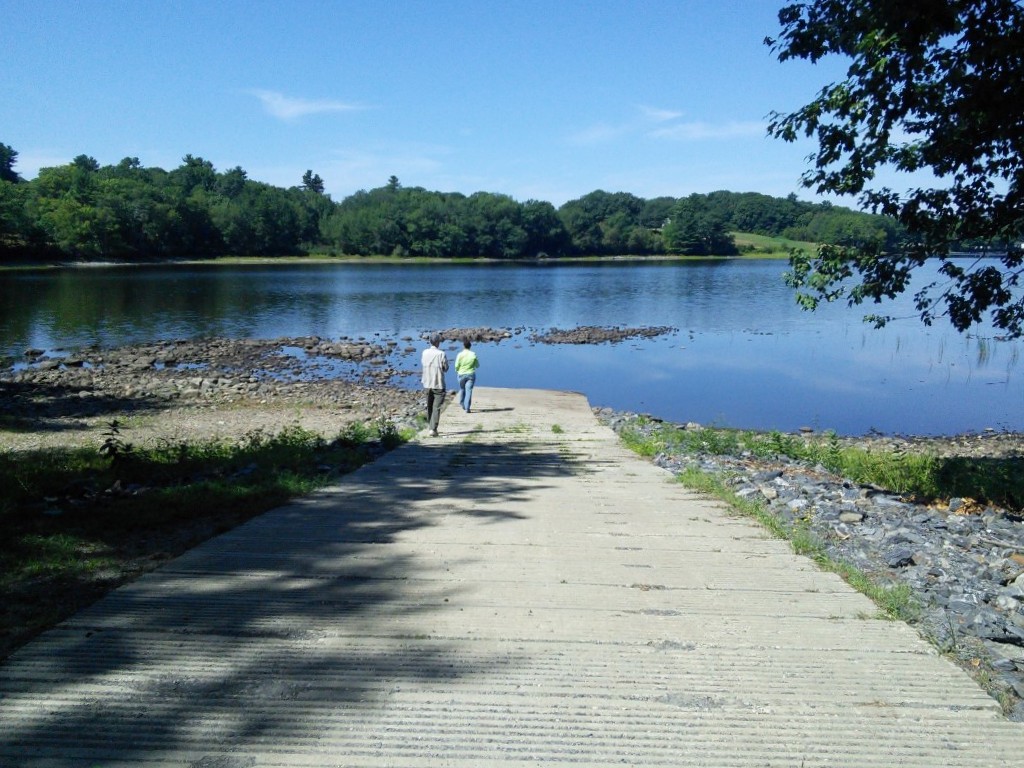
The water level hit -66″ below the top of the dam this morning (a little lower than the picture shows above, which was taken last summer) so it really is about as low as it can get. However, there’s still a good 6″ to 12″ of water where we’ll be working, so plan your wardrobe accordingly: rubber boots or sneakers are in order along with shorts and work gloves. Remember we’ll be handling wet slippery rocks so sandals or barefeet are NOT recommended. The bottom is generally pretty hard however, so you don’t have to worry about getting stuck in the mud!
Any last minute questions, feel free to call George Fergusson. Hope to see you there!
Clary Lake Association To Clear Rocks at State Boat Launch Saturday August 27th
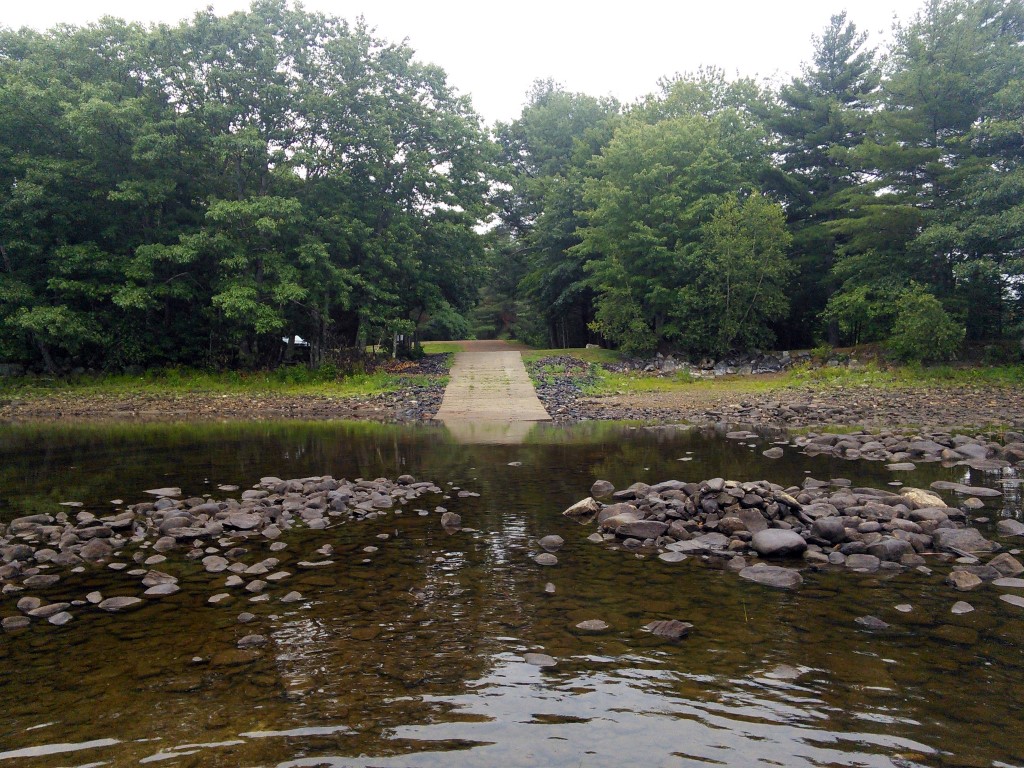 The Clary Lake Association has received authorization from the Maine Department of Inland Fisheries & Wildlife (IF&W) to clear some rocks away from the end of the State boat launch. These rocks constitute a boating hazard which over the years since the boat launch was built have claimed more than a few outboard props and lower units. After discussing this project with representatives of the IF&W, the Clary Lake Association requested IF&W file for a Permit By Rule with the Maine Department of Environmental Protection under the National Resource Protection Act’s Permit By Rule Standards. They did just that, and we received the go-ahead to do the work earlier this week.
The applicable rule is Chapter 305 Section 6 “Movement of Rocks & Vegetation” which provides for limited clearing of rocks and vegetation by hand from a 10′ wide area. Other requirements of the work to be done are that the rocks cannot be removed from the lake gut must be redistributed into small piles that fish fry can use to take refuge, rather than just randomly scattering them. Since this exercise is to remove a boating hazard, the rocks obviously shouldn’t be piled up in a fashion or location that will have them interfering with boat traffic in the future.
Obviously, this work needs to be done while the water level is low. Once the fall rains start and the lake level starts to rise, it will be too late. The water level is currently a little over 65″ below the top of the dam, about 2″ lower than in the photograph above which was taken last summer in July. To that end we have tentatively scheduled a work session (I prefer to call it a party) from 10:00 AM to 2:00 PM on Saturday August 27th to do the rock clearing and we’ll be looking for volunteers to help with the project. Many hands will make the work go quickly! In the next day or so we’re going to send an email mailing to Clary Lake Association members to drum up interest in helping with this project. There are a number of ways you can help with this project. If you’re interested in participating in the actual rock moving or just want to come by, enjoy the event, have fun, and support us in this endeavor, please contact George Fergusson or give me a call at 207-549-5991.
Since we’re going to be splashing around in 6″ to 12″ of water, we’ll be doing this work rain or shine unless there’s an absolute deluge that day in which case we’ll put the work off until the next day. People interested in helping should wear rubber boots or sneakers because you’ll be getting wet. We also recommend gloves. We’ll have a few crowbars available for those recalcitrant stuck-in-the-mud rocks.
There’ll be a cookout around lunch time, and contributions toward this are welcome. It promises to be a fun event. We look forward to your participation!
2016 Annual Meeting Minutes Posted
 [dropcap]I’ve[/dropcap] posted the minutes for our 2016 Annual Membership Meeting held back on August 6th on the Meeting Minutes page. If you missed the meeting for whatever reason they should give you a pretty good idea of what took place. If anyone who was at the meeting sees any glaring errors or omissions please feel free to bring them to my attention. As usual, the Membership will be asked to accept them at next year’s Annual Meeting.
08 August 2016: Clary Lake Association Annual Meeting Huge Success
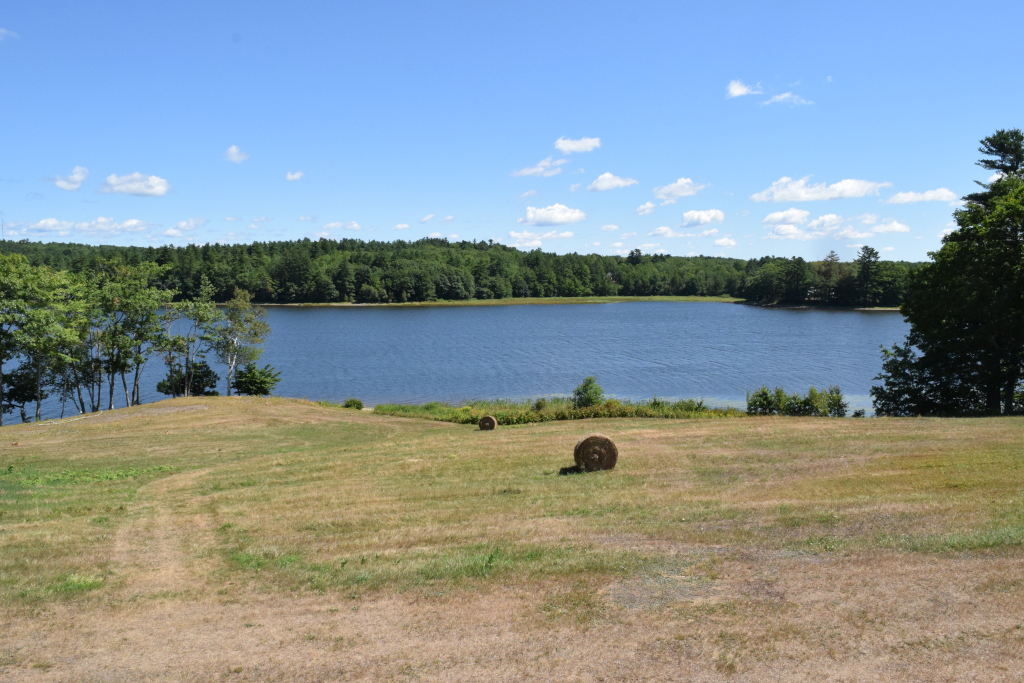 Around 35 people showed up last Saturday afternoon for the 2016 Annual Meeting of the Clary Lake Association held at the home of Erin Grimshaw and Christina Bishop on the south shore overlooking Clary Lake in Jefferson (picture at left). The venue was perfect but the weather was unsettled and VERY HOT. Storms were forecast. A brief rain shower shortly after the start of the meeting forced us to seek shelter inside and when we resumed the meeting outdoors, the air had cooled off nicely. It was a great meeting by all accounts. 19 people joined or renewed their membership before the start of the meeting which brought our total 2016/2017 membership count to 71. Not bad for the day of the meeting! Typically membership renewals continue to come in during the month of August. I’m confident that we’ll reach our goal of 100 members this year. Continue reading
04 August 2016: Annual CLA Meeting Plans, Agenda, Coming Together
 [dropcap]Plans[/dropcap] for our Annual Meeting this coming Saturday afternoon August 6th (at the home of Erin Grimshaw and Christina Bishop at 739 Gardiner Road in Jefferson) are shaping up nicely. The registration table will be setup up by 1:00 PM and the meeting will start at 2:00 PM sharp so if you haven’t already paid your dues yet, plan to show up early to take care of business. The membership year runs from the start of one annual meeting to the start of the next one so in order to vote your dues need to be paid up. If you’re not going to be able to make it to the meeting and want to give your proxy to someone to vote for you, please make sure your dues are paid before the start of the meeting or you won’t be able to vote! Also remember that as a result of recent changes to our Bylaws, anyone can be a voting member simply by paying dues: 1 member = 1 vote.
We’ve got a full agenda (see below). At the top is Senator Christopher Johnson, our guest speaker this year. He’ll be stopping by to speak briefly about his recent activities around Clary Lake, and answering questions. Chris’s schedule that day is tight however and he’ll have to leave early. He’s planning to be there before the meeting starts however so if you want a chance to meet and talk with him, come early. Continue reading
05 July 2016: Pictures from the 46th Annual Maine Lakes Conference
Some pictures from the Maine Lakes Society’s 46th Annual Maine Lakes Conference held back on June 26th. My wife and I attended the meeting and it was quite good:
21 June 2016: Instagram Feeds and Other New Features Added To CLA Website
 [dropcap]Observant[/dropcap] visitors to our website will have noticed some changes and additions to the Association website. First, in an effort to stay relevant in a rapidly evolving online world of social media, we’ve added some Instagram feeds. You’ll notice on the sidebar, right under the “Recent Site Pictures” two Instagram items. The first shows pictures from the “Clary Lake Me” Instagram page, and the next one down shows pictures from the #clarylake feed. I’ve also added an Instagram Page under the Pictures main menu heading. Many of you will know all about Instagram but for those of you who don’t (which group included me about 3 days ago) Instagram is “an online mobile photo-sharing, video-sharing, and social networking service that enables its users to take pictures and videos, and share them either publicly or privately on the app, as well as through a variety of other social networking platforms, such as Facebook, Twitter, Tumblr, and Flickr”. The hardest thing for me to grasp about Instagram was that while you can cruise around Instagram and look at stuff using a web browser on your desktop or laptop computer, you can only post pictures using an Instagram app on your cell phone or tablet.
17 June 2016: Loon Nest Spotted on Clary Lake!
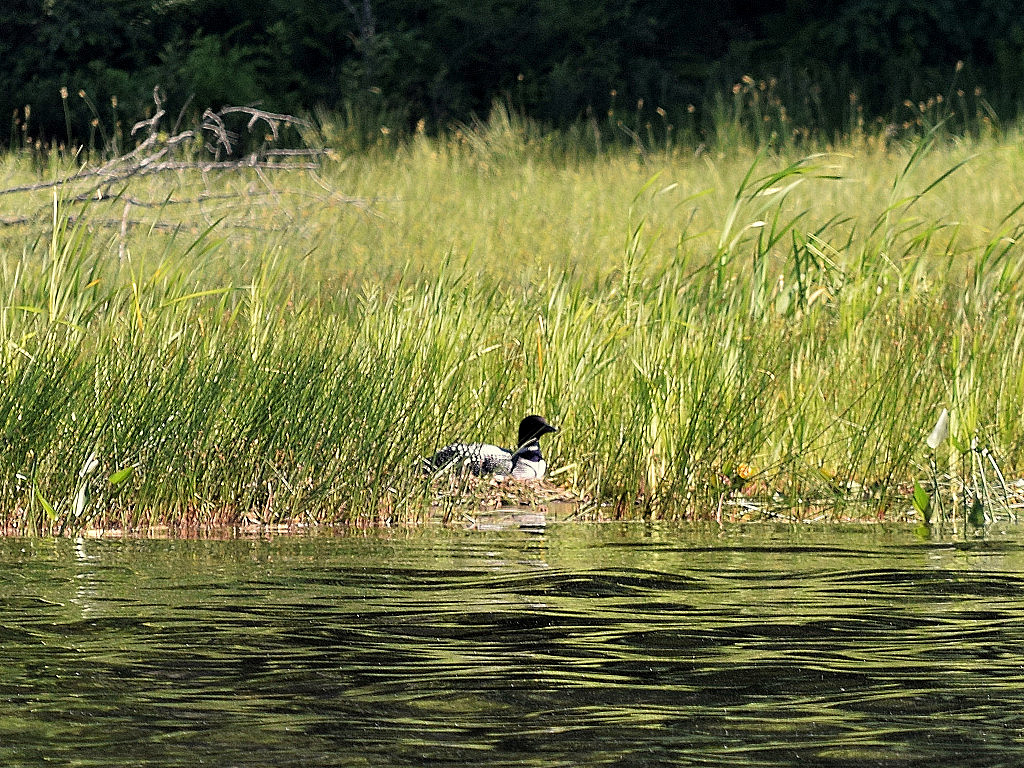 For the first time since the summer of 2012, a pair of loons is attempting to nest again on Clary Lake. This is fantastic news and it has us very excited. The nest is located at the end of the sandbar on the east end of the lake 800′ to 900′ feet northwest of the State Boat launch, opposite Randy and Arlene Wing’s home which is the white cape located next to the boat launch. In fact news of the loon nest was brought to my attention by Arlene Wing who sent me an email last night. David Hodsdon, Jack Holland, and I were scheduled to conduct our biweekly water quality monitoring data-collection exercise this morning and after we were done we boated over and confirmed that there is indeed a loon nest there. I was able to get a couple of pictures of the sitting loon without getting too close.
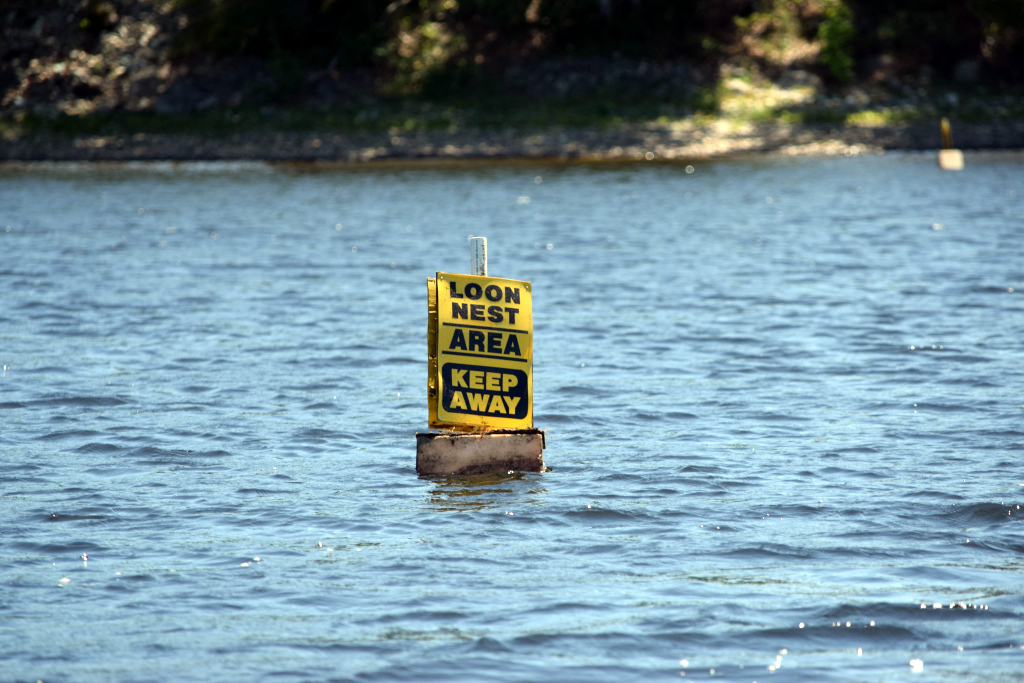
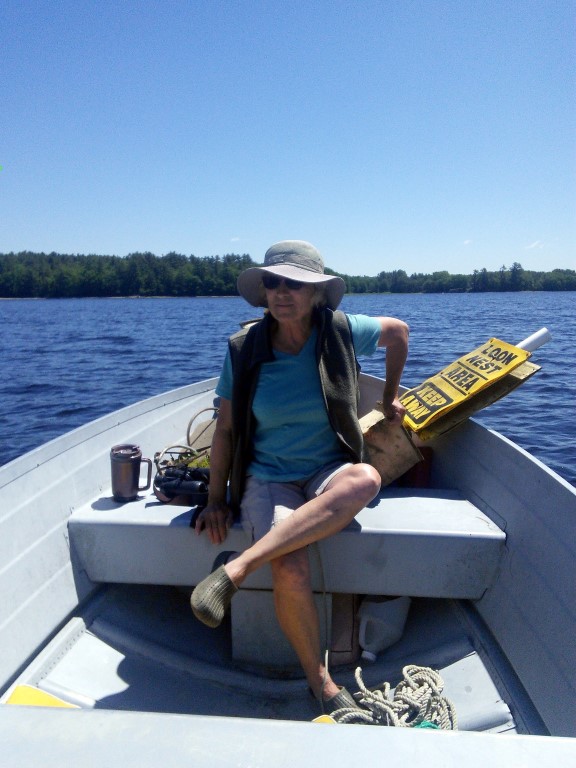 Our resident Loon expert Mary Gingrow-Shaw (pictured at left) helped me round up the Association’s floating “LOON NEST AREA” signs which have been languishing in the weeds near my boat launch and together we headed over about noon today and set 3 of them just off shore from the sandbar to warn boaters away from the nest. Hopefully people will see these signs and give the loons the peace and solitude they require. People however are the least of the problems these marvelous bird face. They are vulnerable to attack by eagles from the air and coyotes and foxes from the shore. Once the eggs hatch (gestation period is 26 to 31 days) the risks only increase: I’ve seen more than a few baby loons snatched by snapping turtles than I care to remember.
 By far the biggest threat these nesting loons now face is from fluctuating water levels. Their nest can either become stranded if the lake level falls too much, or get flooded if it rises too much. As you can see in the picture, loon nests don’t have a lot of freeboard- only 3″ or 4″ at most. An inch or 2 of rain is all it will take to bring the lake up that much and more.

Loon Nest Area Sign.
These floating signs were built many years ago by long time Clary Lake Association member Edward Grant and were last used in 2012 when a loon pair attempted to nest in the marsh over on the west end of the lake by Route 126. Sadly, that nesting attempt failed when the nest was flooded. Let’s hope that doesn’t happen again. Please everyone, respect these signs and give the Loon nest a wide berth. We’ll be monitoring the nest from the shoreline and will post more pictures and updates as the summer progresses.
46th Annual Maine Lakes Conference Coming Up June 25th
The Maine Lakes Society (formerly the Congress of Lake Associations or COLA) is holding their Annual Maine Lakes Conference on the 25th of this month. The itinerary, as usual, looks excellent. The Clary Lake Association is a long-time member of the Maine Lakes Society. For years the annual COLA conference was attended by Association Member Ed Grant. I’ve made a point of going in recent years and I always learn something new. I’ll be going to this one. The cost is $35 which includes lunch.
Here’s the email notice I received about this event:
 |
|
We invite you to join us at the 46th Annual Maine Lakes Conference on Saturday, June 25th, at the Unity College Center for the Performing Arts!
This year we look to the future of Maine lakes monitoring and protection, and the myriad ways citizens can get involved in lake protection. Our Keynote Speaker, Holly Ewing of Bates College, will introduce us to the latest research on Gloeotrichia echinulata blooms and GLEON, the Global Lake Ecological Observatory Network, which is helping scientists and citizens alike better understand and communicate the way lakes are responding to our changing climate. Afternoon workshops on citizen science, lake and fisheries restoration, the latest on LakeSmart, new partnerships with Maine Audubon’s Stream Smart and LoonSmart programs, translating science in your outreach products, and hands on workshops offer diverse learning experiences at a great new venue in Unity, Maine. Additional Workshops include:
The annual conference will be at the fabulous Unity College Center for the Performing Arts nearLake Winnecook in Unity, Maine. Keep an eye on our Facebook page and website for more information on presentations and speakers. We are also still welcoming conference sponsors!
We hope to see you there!
|



Maine Lakes Society
P O Box 447 Belgrade Lakes, Maine 04918
|

11 June 2016: Spring/Summer 2016 Newsletter Posted On Line
 I’ve posted the Spring/Summer 2016 CLA Newsletter here on the site. Feel free to download it and share it with your friends and neighbors.
A couple of days after we mailed these out 8-10 of them were returned because they had only one mailing seal on the top. Apparently it is now a requirement that folded mail items be sealed on three sides, with the fold on the bottom. Who knew? At least we had the fold in the right place! I put additional seals on the 8 or so newsletters that had been returned and the postmistress sent them out again for no additional charge. Apparently there’s a post office worker in Augusta (all the returned newsletters were for Augusta addresses) who’s a real stickler for regulations. We won’t make that mistake again 🙂
None have been returned for bad addressing which is always nice. If you think you should have received a printed newsletter and one hasn’t arrived yet, let me know. If you’d like to be added to our mailing list, email me your contact info.